Unitree Robotics H1vsXPeng Iron
Side-by-side comparison of Unitree Robotics H1 and XPeng Iron: specs, price, use cases and SDKs.

H1
Sub-$100K Chinese humanoid — fastest walker in class
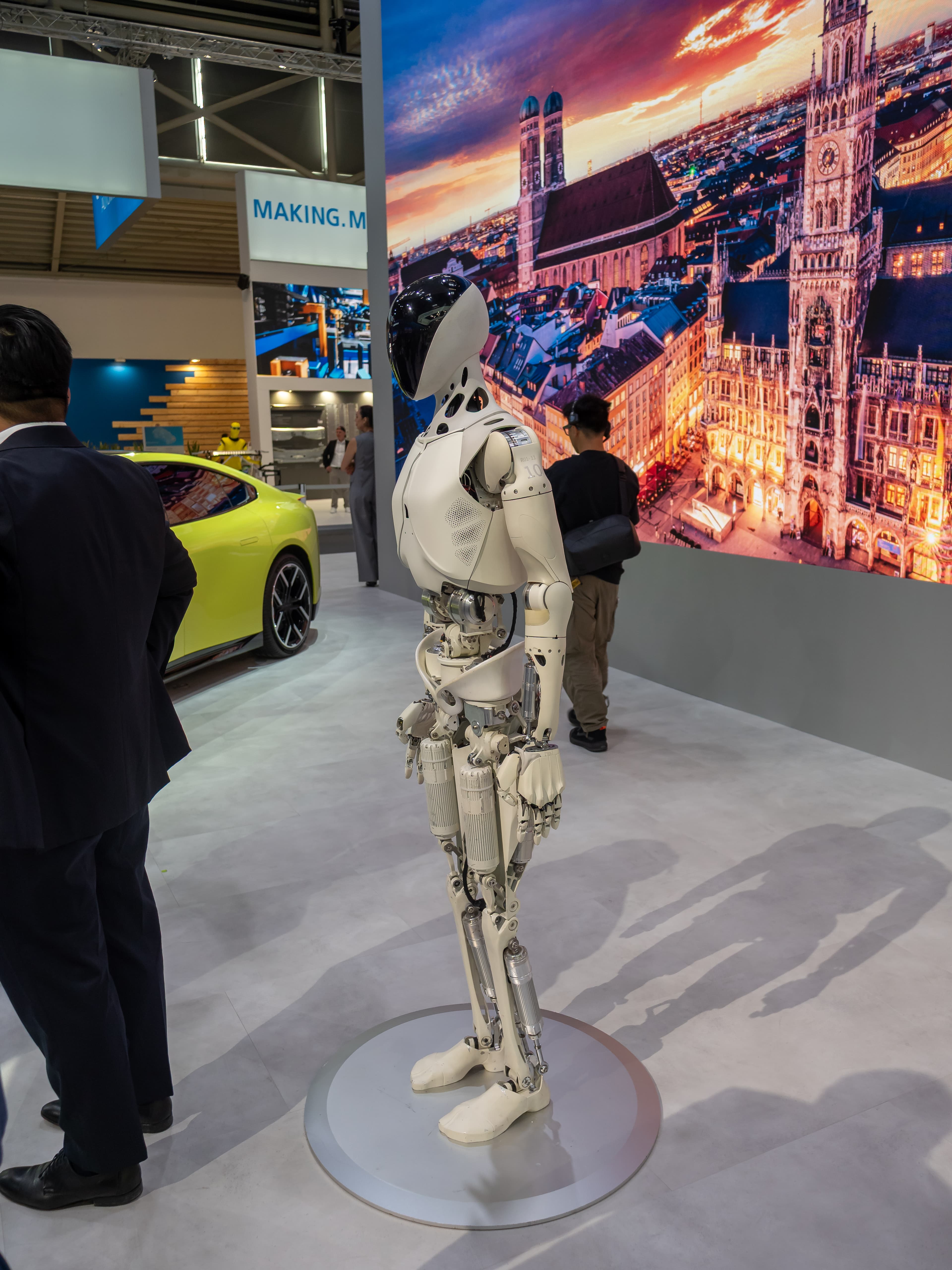
Iron
Automotive-grade humanoid from XPeng
Specifications
| Spec | H1 | Iron |
|---|---|---|
| Price (USD) | $90,000 | $28,000 |
| Category | humanoid | humanoid |
| Payload | 30 kg | 20 kg |
| Runtime | 2 h | 5 h |
| Speed | 3.3 m/s | — |
| Weight | 47 kg | 70 kg |
| Degrees of Freedom | 19 | 60 |
- Humanoid robotics research
- Industrial R&D
- Content creation / film
- Robotics competitions
- Automotive manufacturing
- Factory automation
When to pick which
Select the Unitree Robotics H1 for academic research, robotics competitions, or industrial R&D labs requiring deep software customization. Its open-source SDK, ROS2 drivers, and Python API provide the transparency needed for developing proprietary locomotion algorithms. The H1 is the superior choice for dynamic environments where speed is a constraint, as its 3.3 m/s walking pace leads its class. Additionally, its 30kg payload capacity on a lightweight 47kg frame makes it ideal for content creation or field testing where the robot must carry heavy sensors or equipment without sacrificing agility or portability.
Choose the XPeng Iron for large-scale automotive manufacturing and factory automation where cost-per-unit and high dexterity are the primary drivers. At a $28,000 price point, it allows for fleet deployment at a fraction of the cost of research-grade humanoids. The 60 degrees of freedom provide the fine motor control necessary for complex assembly line tasks that require human-like manipulation. With a 5-hour runtime, the Iron is better suited for full-shift industrial operations than the H1. It is the practical choice for established facilities needing an automotive-grade, high-dexterity worker for repetitive, long-duration production cycles.
Ready to evaluate?
Request a vendor quote or compare more options.